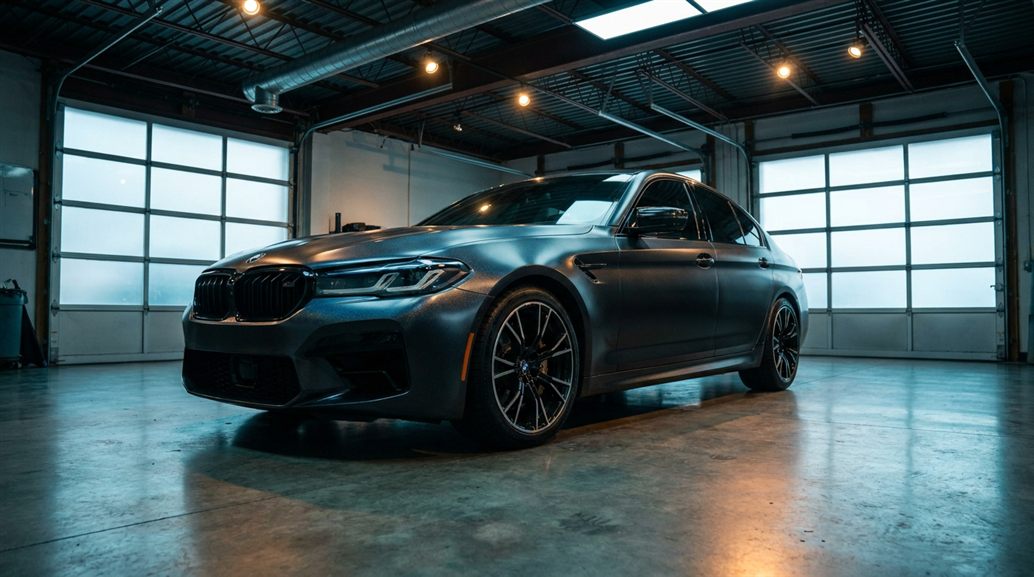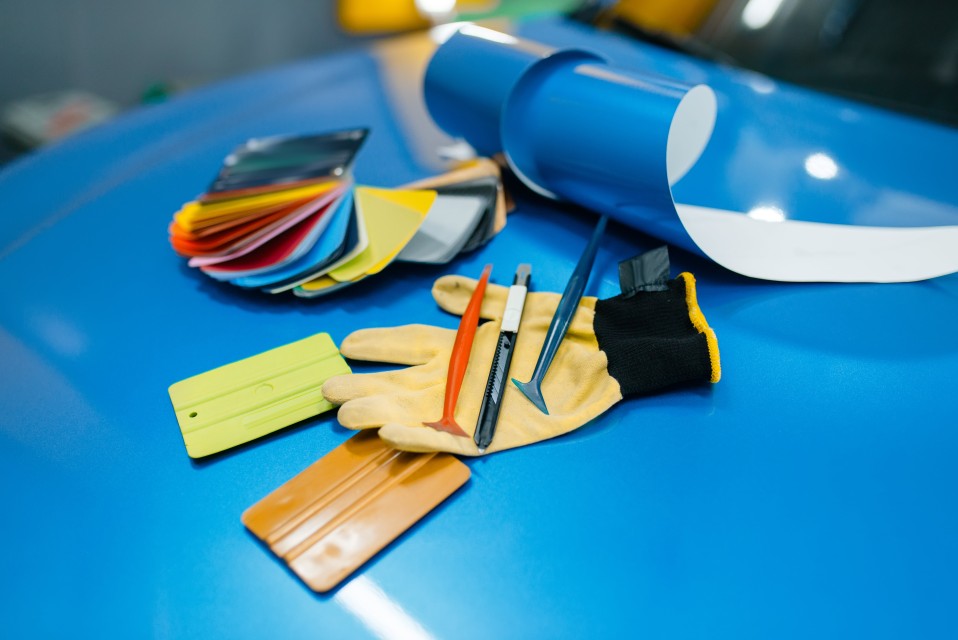
The difference between a shop that wraps a sedan in thirty hours and one that wraps the same sedan in forty-two is rarely about how fast the installer's hands are. It's the cut. A great print-and-cut workflow shaves 4 to 8 hours off every full wrap and turns 22% material waste into 12%. The same shop, doing the same work, with more bays free.
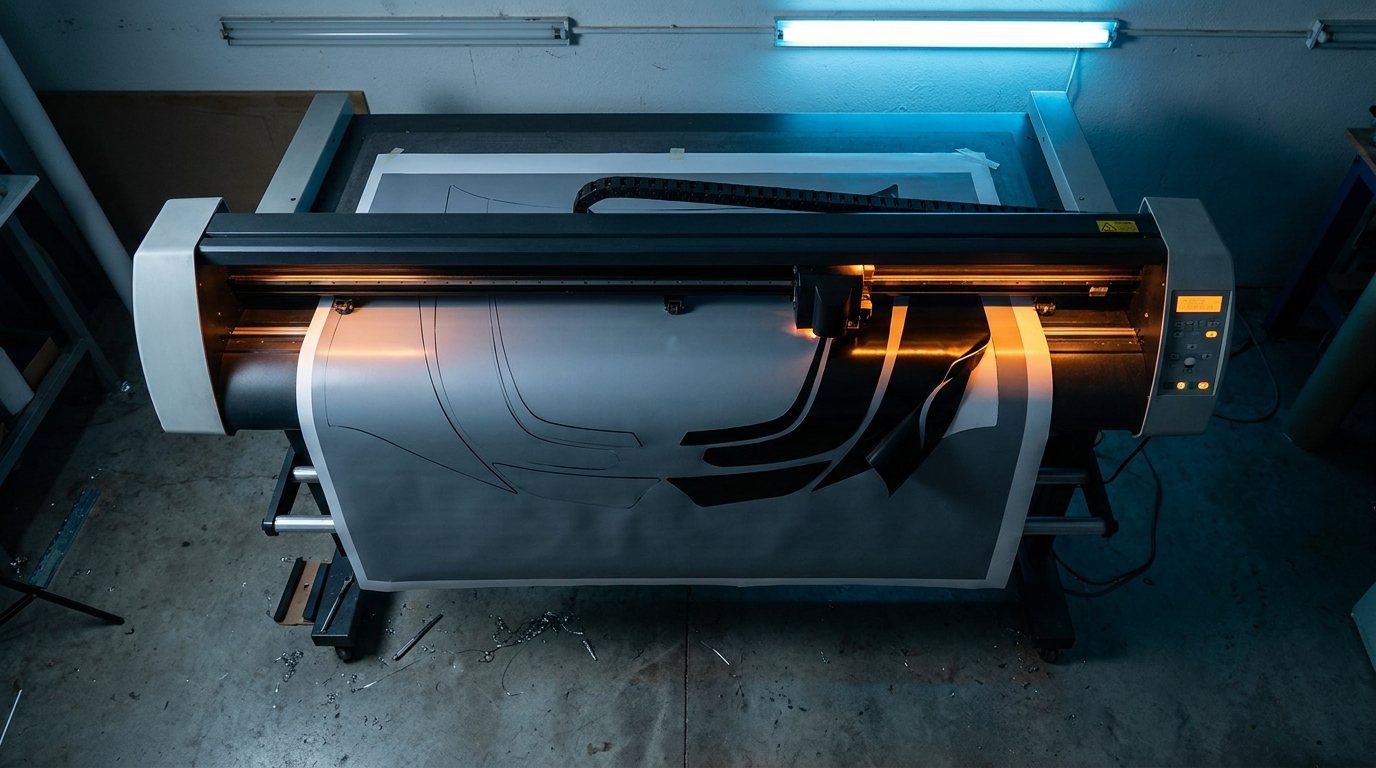
If the term is new: a plotter is the desk-sized cutting machine in every wrap shop. Print-and-cut is the workflow around it, design done digitally, panels cut before the car is even on the lift, the install team only installs.
What print-and-cut actually solves
The old way: the installer eyeballs each panel, cuts vinyl by hand from a roll, fits it, trims excess. Works, but the install team is doing two jobs (designing and installing) at once. Every car becomes a custom design exercise.
The print-and-cut way: the panel templates are pre-built (or generated from a 3D model) and the plotter cuts each piece to the right shape before the installer touches the car. The install team only installs.
What changes in practice:
- Time per car drops 4-8 hours on a full wrap (10-25% reduction)
- Material waste drops from typical 20-25% to 10-15%
- Quality consistency improves (every car gets the same templated cuts)
- Newer installers can run jobs that previously required senior-only skill
Print-and-cut is what separates a shop that grows past one installer from a shop that doesn't.
The software side
The cutting software
The software sends the plotter the actual cut paths. Common options:
- SignLab, Flexi, FlexiSIGN: traditional sign-industry tools, adapted for vinyl work
- KnifePrint, Roland CutStudio, Graphtec Studio: plotter-manufacturer bundled tools
- Adobe Illustrator with a plotter plugin: power users who want full design control
Most working shops use one of the manufacturer-bundled tools for cut output plus Illustrator for design. The shops outgrowing this use SignLab or Flexi for production-scale work.
The template library
This is where the workflow comes alive. Three sources of vehicle templates:
- Pre-built libraries (XPEL DAP, Roland's vinyl libraries, third-party template stores) cover the most common vehicles
- Generated from a 3D configurator (a modern shop's visualizer outputs cut-ready templates for the specific design the customer signed off on)
- Hand-designed by the shop's senior installer (slow, but necessary for unusual vehicles or custom designs)
The shops with the best margins are running on automated template generation from a 3D source.
The workflow
What a print-and-cut day looks like at a shop running this well:
Pre-install (the day before)
- Pull the approved render from the customer's design file
- Generate cut-ready templates for every panel of the wrap
- Estimate material usage; check inventory
- Run the plotter overnight or first thing in the morning
- Lay out cut pieces on labeled tables matched to panels
Install day
- Customer drops off; intake photos taken
- Prep (wash, decontaminate, IPA wipe)
- Installer pulls panel 1, applies, moves to panel 2. No design decisions during install; every cut already done.
- Move through panels in efficient order (typically: hood/roof/trunk/fenders, then doors, then bumpers, then trim)
Post-install
- Final inspection
- Photos for customer and portfolio
- Save the cut files in the customer's folder for any future touch-up
The shop running print-and-cut well looks calm during install. The shop without it looks busy.
Where most shops get it wrong
Treating it as optional
Some shops use templates for “easy” cars and freelance for “hard” ones. The compounding effect: every car becomes its own learning curve. The shops that commit to print-and-cut every car build a faster team faster.
Cheaping out on the plotter
A $1,500 plotter and a $5,000 plotter are not the same machine. The cheap one is slower, cuts less accurately, and can't handle the heavy vinyls in long runs. For a shop doing 10+ wraps a month, the production-grade plotter pays back in 4-6 months.
Skipping the template library investment
Spending two hours building a template for a vehicle you'll wrap once is wasted time. Spending two hours on one you'll wrap ten times pays back several times over. The shops that maintain a real template library see those hours come back as savings on the third install of the same car.
Not training the team on the cut files
The installer who can't read the cut layout and can't make a small adjustment in the software is dependent on the designer being on-site. That's a single point of failure. Cross-train every installer on basic cutting-software literacy.
Buying the plotter is the easy part. Committing to use it on every install, then training the team to read the cut files, is where the savings actually live.
The 3D visualizer connection
The next-generation version of print-and-cut starts even earlier in the workflow: the customer's approved 3D design becomes the cut file automatically.
The customer sits in the consultation, picks the finish on the visualizer, signs off on the design. That same file generates the panel breakdown, the cut paths, the spec sheet for the installer, the material order. No manual translation.
Modern configurators like Zeno can output this end-to-end. The consultation produces the install brief. The design becomes the cut. The cut becomes the install. Every step that used to need a hand-off now lives in one workflow.
For shops not on this workflow yet, the upgrade is a 2026-class capability. For shops that are, the operational difference is meaningful.
The render the customer signed off on should become the install brief without anyone retyping anything.
The math, concretely
For a shop doing 12 full wraps a month at an average of 35 install hours each (industry typical):
Without print-and-cut
- 35 hours per wrap × 12 wraps = 420 install hours/month
- Material waste at 22% of vinyl cost
- Effective billable capacity: 420 hours
With disciplined print-and-cut
- 27 hours per wrap × 12 wraps = 324 install hours/month (96 hours freed)
- Material waste at 12%
- Effective billable capacity: 420 hours, now usable for 4 additional wraps
96 hours back per month, at $90/hr shop rate, is $8,640/month of capacity, or about $100k/year of revenue potential without adding headcount. Plus 10% lower material burn (around $5-8k/year in saved vinyl).
The investment to capture this: a real plotter ($5-8k), a software subscription ($30-80/month), and 40-80 hours of upfront workflow setup.
A six-figure capacity increase from a five-figure setup cost. The math is rare. Don't sit on it.
Where to start this week
- Audit your current cut workflow. How many hours per car are spent on design decisions during install?
- Pick a software you'll commit to (and stop using two)
- Start a template library with your three most common vehicles
- Run one full wrap as a test, with the design fully cut before install starts
- Compare hours, waste, and quality against your average
If the test wrap is faster and cleaner, you've found a permanent operational gain. If it isn't, you've found a workflow problem (almost always the template, sometimes the team). Either way, you learn something useful.
Ninety days in, you'll either have a print-and-cut habit or you'll have given up trying. The shops still doing it on day 91 are the ones with second installers on day 365.