Most people walk into a wrap shop having read a $4,000 number on a forum and a $9,000 number on Instagram, and have no idea why those are both real. The answer is it depends, but it depends on a fairly small number of things. Once you can see them separately, you can read any quote and tell whether the number is fair, low, or quietly skipping something you wanted.
A quick note on terms before the numbers: a car wrap is a thin printed vinyl film applied over your existing paint. Removable, protects the paint underneath, changes color or finish (matte black, color-shift purple, satin metallic gunmetal, anything you'd recognise from a car build). Not a paint respray.
This is the breakdown we wish more buyers had before they started calling shops.
The short version
For a quality full-vehicle vinyl wrap in 2026, on a normal-sized car, in a normal North American or European market, expect to pay somewhere between $3,500 and $7,500. That's the band where most reputable shops sit for a standard color change on a sedan, coupe, or compact SUV.
Trucks and large SUVs run higher. Exotic and complex body shapes run higher. Premium finishes (color-shift, chrome, satin metallics) run higher. Below that band, you're either looking at a partial wrap, cut-rate material, or a shop you should ask hard questions of.
That's the headline. The rest of this post explains why those numbers move the way they do.
The four variables that actually set the price
Every wrap quote is the sum of four things. Once you can see them separately, you can stop comparing quotes apples-to-apples that aren't actually the same fruit.
1. Vehicle size and shape
Shops typically price by square footage of material plus labor hours to apply it. A small car has roughly 250 square feet of body. A full-size pickup or three-row SUV has 400 or more. That alone is a 60% jump in material cost before anyone touches a squeegee.
Shape matters as much as size. A modern sedan with smooth panels and gentle curves is faster to wrap cleanly than a car with deep body lines, sharp creases, recessed handles, complex bumpers, and a heavily contoured rear. Cars that look exciting (think a modern Mustang, a G-Wagon, an old-shape 911) tend to wrap slower than cars that look conservative.
The very approximate scale most shops use:
- Compact / sedan / coupe: base price
- Mid-size SUV / wagon: base + 10 to 20%
- Full-size SUV / pickup truck: base + 25 to 45%
- Exotic / heavily contoured / show car: base + 30 to 60%
2. Material brand and finish
The vinyl itself is a real chunk of the bill. The industry splits films into two grades: cast (the premium kind, poured into thin sheets, conforms to curves, lasts) and calendered (cheaper, rolled out under pressure, stiffer, shorter lifespan). Premium cast vinyls from brands like 3M, Avery Dennison, KPMF, Inozetek, and Hexis cost the shop two to four times what calendered vinyl costs. They also last two to three times as long, conform better, and look noticeably better in the sun.
Within those premium brands, certain finishes carry a premium of their own:
- Standard gloss and satin colors: the baseline. No finish premium.
- Matte and matte metallic: usually a small premium, 5 to 10%.
- Color-shift, chrome, brushed metal, carbon-textured: a real premium, often 20 to 40% more in material cost, plus longer install times because these finishes are harder to seam invisibly.
- Paint protection film (PPF): a thick, near-invisible film that protects paint from rock chips, instead of (or under) vinyl. Different category entirely (see PPF vs vinyl), but expect to roughly double the budget for a full PPF.
If a quote feels suspiciously cheap, the answer is usually here. The shop is using a cheaper film. Ask for the brand and product code in writing.
3. Coverage
This is the most common place where two quotes for “the same job” actually differ. “Full wrap” means different things at different shops.
A real full wrap covers all visible exterior body panels, including:
- Roof, hood, trunk or tailgate, fenders, doors, bumpers, rockers (the panel below the doors), and pillars (the vertical posts between the windows)
- Door cups, the recessed area you put your fingers into to open a door
- Door jambs, the painted edges of the door that are only visible when the door is open
- Around badges, emblems, and trim, ideally with the badge removed and reinstalled
- Inside the fuel filler door
A cheaper “full wrap” might skip jambs, leave the door cups in factory color, work around badges instead of removing them, and avoid recessed and difficult areas. None of these are dishonest as long as the shop is clear about what's included. The problem is when they aren't, and you find out at handoff.
When you get a quote, ask explicitly: door jambs, door cups, around badges, fuel door. The answers will tell you which kind of “full wrap” you're being quoted on.
4. Labor hours and shop tier
The last variable is the part most owners forget: not all shops charge the same rate for their time, and not all shops take the same amount of time.
A high-end shop with manufacturer certifications, experienced installers, and a clean facility might charge $100 to $150 per labor hour and take 30 to 50 hours on a full wrap. A budget shop might charge $50 to $75 per hour and take longer, or charge more aggressively per hour and rush. The product at the end can vary by an order of magnitude in quality, even with the same vinyl on the same car.
Cheap installs lift at the edges within months. Quality installs hold for years.
Realistic 2026 price bands
Putting the variables together, here's what a fair, reputable-shop quote actually looks like in current dollars. These are full-vehicle, full-coverage numbers using premium cast vinyl in standard finishes. Adjust up or down based on the variables above.
Vinyl color change, full vehicle
- Compact car / small sedan: $3,200 to $5,200
- Mid-size sedan / coupe: $3,800 to $6,000
- Mid-size SUV / crossover: $4,200 to $6,800
- Full-size SUV / pickup truck: $4,800 to $7,800
- Exotic / luxury / complex body: $5,500 to $10,000+
Premium finish surcharge
- Matte or matte metallic: add 5 to 10%
- Color-shift, chrome, or brushed: add 20 to 40%
- Custom printed wrap / livery design: add $1,500 to $4,000 depending on complexity
Partial wraps
A lot of buyers don't need a full wrap. Partial wraps target specific panels and are dramatically cheaper:
- Roof only: $400 to $900
- Hood only: $400 to $900
- Mirrors: $150 to $300 per pair
- Front-end accent (hood + fenders + mirrors): $1,200 to $2,500
- Two-tone (different color on roof, pillars, sometimes hood): $1,500 to $3,500
Paint protection film (PPF), for context
- Front-end PPF (bumper, hood, fenders, mirrors, headlights): $1,800 to $3,500
- Full-vehicle PPF: $6,000 to $12,000+
What drives the number up
If you're getting a quote that's higher than the bands above, here are the legitimate reasons:
- You picked a premium finish. Color-shift, chrome, brushed, and printed finishes are simply more expensive in material and install time.
- Your car has unusual or aftermarket body work. Body kits, wide-body conversions, aftermarket bumpers, and custom panels add hours and sometimes require custom-cut sections.
- You want full coverage, including jambs and door cups. Done properly, this adds significant time. It's the right answer if you want the wrap to look factory, but you are paying for it.
- Your paint needs prep work. If the existing paint is contaminated, oxidized, or has had cheap touch-ups, a real shop will want to clay-bar, possibly machine-polish, and definitely re-prep before installing. Some shops bill this separately; others bake it in.
- You're in an expensive metro market. Labor rates in Los Angeles, New York, Toronto, London, or Sydney run higher than the same shop's equivalent in a smaller market.
What drives the number down (and what to watch for)
If a quote is dramatically lower than the bands, one of these is usually true:
- Calendered vinyl instead of cast. Cheaper material, doesn't conform as well, doesn't last as long. Fine for short-term applications, not for a daily-driver you want to look good in three years.
- Partial coverage being sold as “full.” The visible panels get wrapped, the jambs and door cups don't, recessed areas are skipped. Looks fine until you open a door.
- Skipped prep. The car gets a quick wash and goes straight to install. Bubbles, contamination, and premature failure follow within months.
- An inexperienced installer. The vinyl might be premium, but if the person applying it learned the craft in the last six months, the result will show.
Cheap and well-executed is a real category. Cheap and badly executed is the one you want to avoid.
Hidden costs that often get missed
A few line items that buyers regularly forget to ask about:
- Removal of the wrap later. Premium vinyl removes cleanly within its warranty period. Cheap vinyl, or vinyl left on too long, can require labor-intensive removal that costs $500 to $1,500. Ask up front.
- Touch-ups in the first year. Reputable shops include this; budget shops often don't. If a small edge lifts, will they fix it free?
- Aftercare products. Wash mitts, ph-neutral soap, microfiber towels. Not a huge expense, but real.
- Storage during the install. Some shops keep your car in an enclosed bay; others leave it outside between days of work. The latter is a real risk.
The question most quotes don't answer
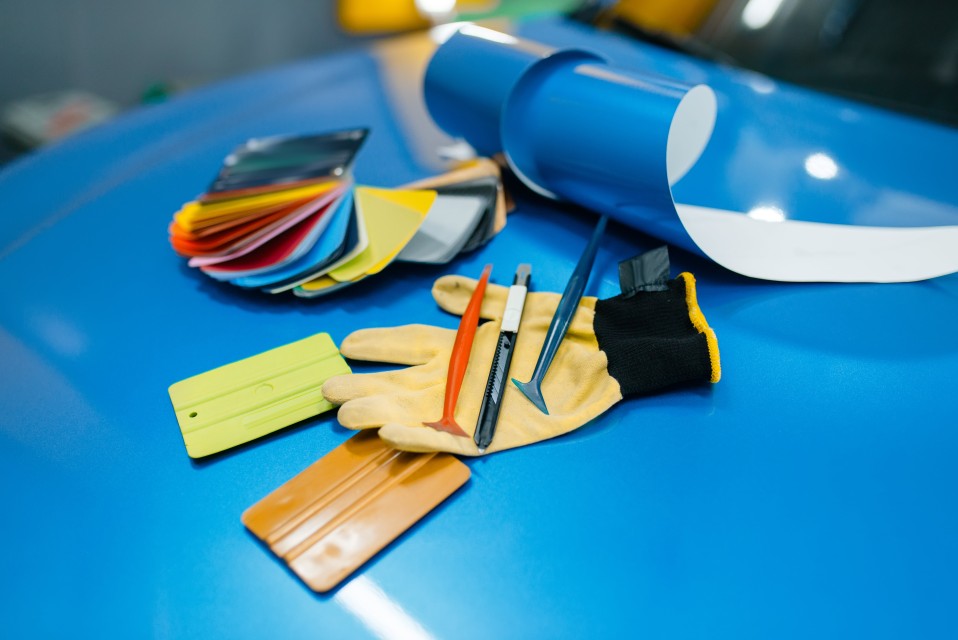
The biggest gap in the wrap industry isn't pricing transparency. It's visualization. Most buyers commit thousands of dollars to a color they've only seen as a 2-inch swatch (a small sample card) under fluorescent light, on a vehicle that isn't theirs.
That's the gap Zeno closes for the shops using it. You see your actual car, in the actual finish you're considering, rendered in natural light, with the ability to compare two options side by side and rotate around the vehicle. The same finish that looked “safe” on a swatch sometimes looks wrong on your specific car. The one that felt like a stretch sometimes looks perfect.
Better to learn this on screen than after the wrap is installed.
If the shop you're talking to offers 3D visualization, use it. It costs them nothing to send you a render, and the decision you make afterward will be a confident one.
What you should walk into a shop with
One last thing. If you remember nothing else from this post, remember the four questions that turn an open-ended quote into something you can actually compare:
- What brand and product code is the vinyl? Get it in writing.
- What's included in “full coverage”? Specifically: door jambs, door cups, around badges, fuel door.
- How long will it take, and where will the car be stored?
- What's the warranty, and what does removal cost when I'm done with the wrap?
Those four answers, together, are usually a better signal of shop quality than the price itself. A great answer at a higher price is almost always the right choice. A vague answer at a lower price is almost always the wrong one.
Wraps are not a small purchase, but they're an affordable way to dramatically change a car you already own. With the right shop, the right material, and a clear-eyed view of what you're buying, the result holds up for years and looks better than factory paint ever did.