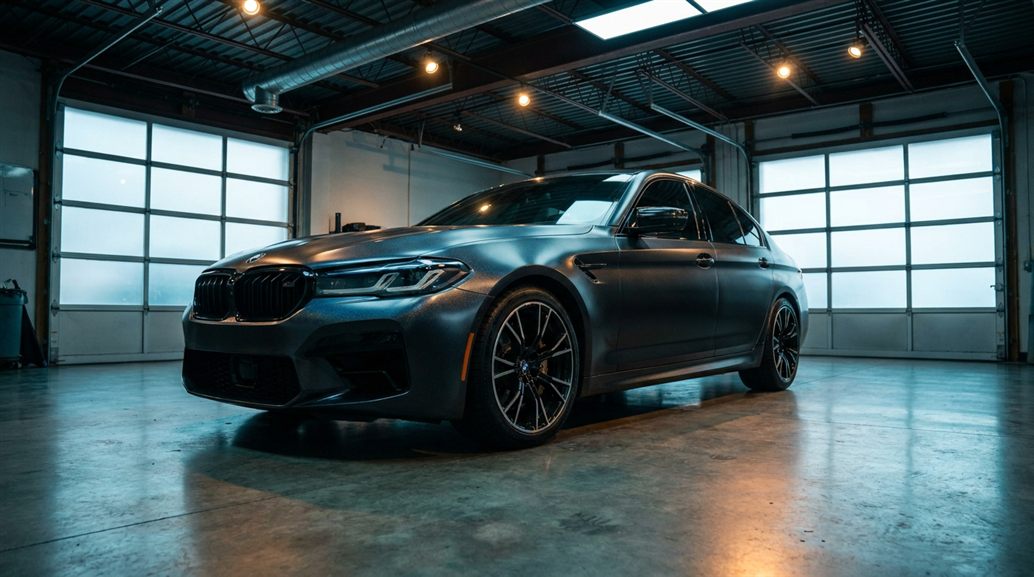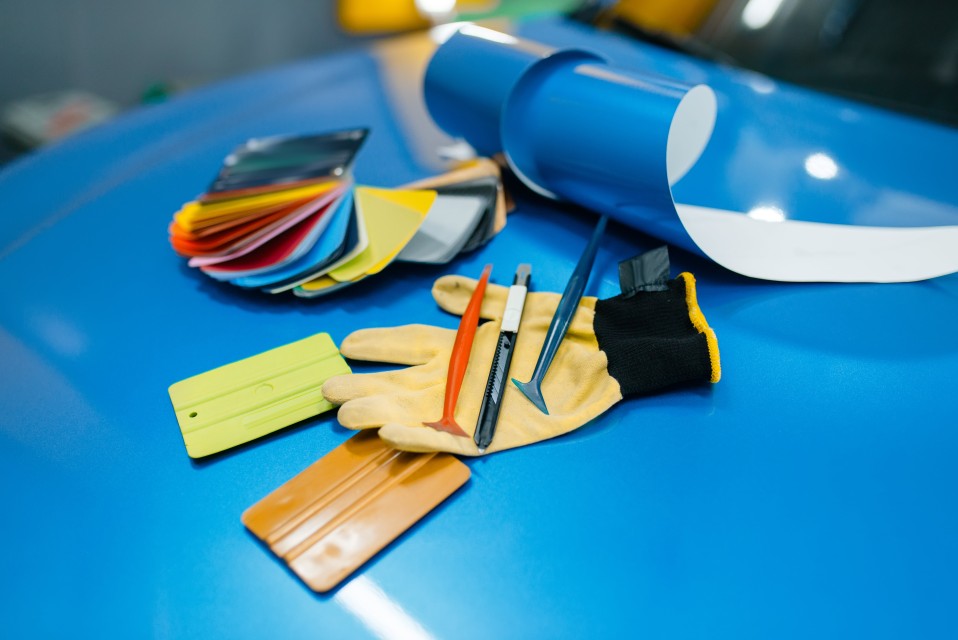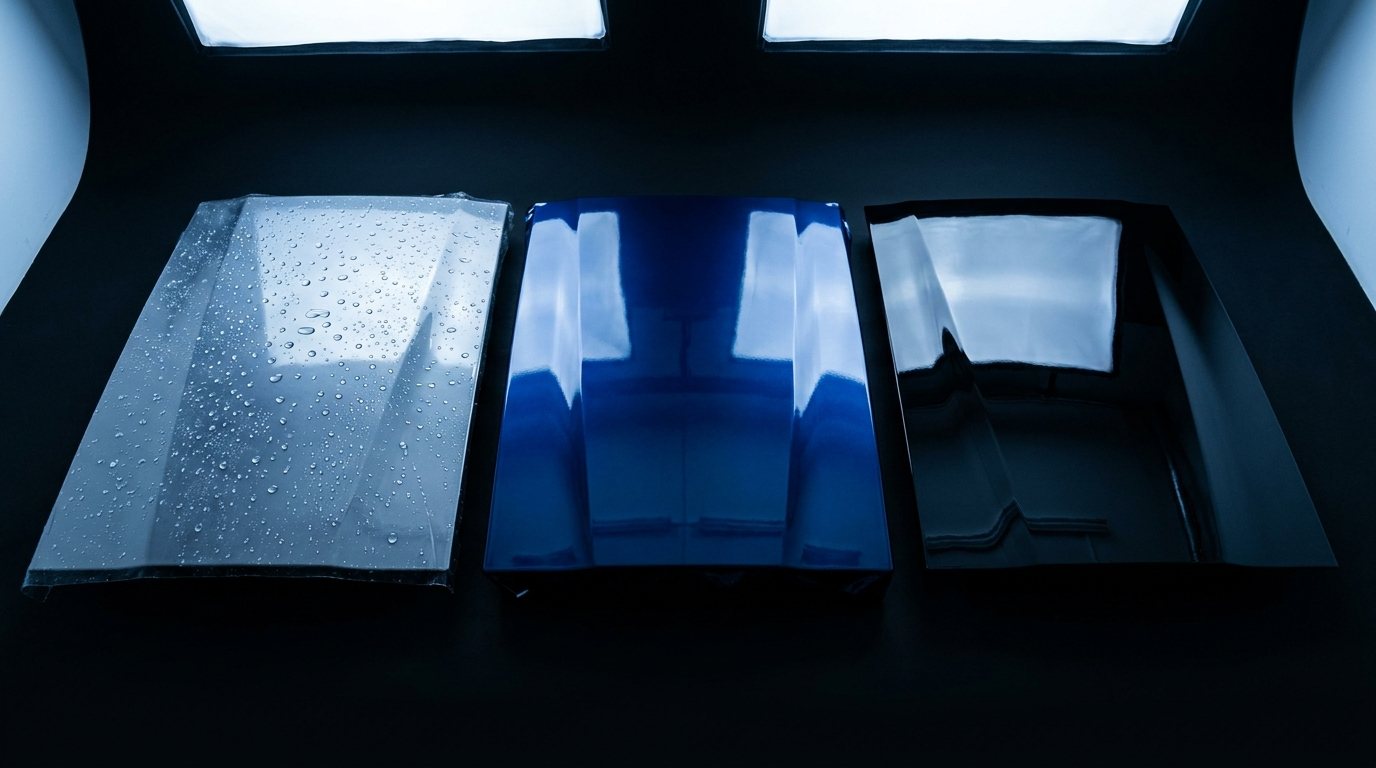
If you have ever sat at a detailer's counter and listened to them explain why you need all three, this post is for you. The truth is most cars need one of them. A few need two. Almost none need all three, and the shops that sell all three to every customer are either confused or relying on you being.
The trick is figuring out which problem you're actually trying to solve.
The one-line definition of each
Before anything else, the simple version. Skip ahead if you already know.
Vinyl wrap
A thin printed plastic film, applied like a sticker over your paint, that changes the color or finish of the car. Comes off later. Doesn't really protect the paint, that's not what it's for. Lifespan: 5 to 7 years on a quality install.
PPF (paint protection film)
A thick, near-invisible film, applied over the paint, that protects it from rock chips, scratches, and minor scuffs. Usually clear, sometimes available in satin or matte finishes. Lifespan: 7 to 10 years.
Ceramic coating
A liquid that hardens onto the paint (or onto vinyl, or onto PPF) and forms a thin glassy layer that repels water, dirt, and chemical stains. Makes washing easier. Adds a small amount of scratch resistance, but nothing like PPF. Lifespan: 2 to 5 years depending on the product and the prep.
Vinyl changes how the car looks. PPF protects what's underneath. Ceramic makes maintenance easier.
The jobs each one is actually built for
Treat this section as a decision tree. Most people stop reading here.
You want a different color or finish
Vinyl. Full stop. Neither PPF nor ceramic can change the car's color in any practical way (PPF comes in a small handful of colored variants now, but the selection is a fraction of vinyl's). You don't pay extra for PPF or ceramic to chase a look that vinyl does better and cheaper.
You want to protect a new car's paint from rock chips
PPF, at minimum on the front impact zones (bumper, hood leading edge, mirrors, rocker panels, headlights). Ceramic won't stop a stone strike. Vinyl will tear before the paint underneath even notices. PPF is the only one of the three that actually absorbs impacts.
You want washing to be faster, and the paint to look glossier
Ceramic. It is the only product of the three explicitly designed for this. Water beads off cleanly, dirt doesn't bond as easily, washes go from 90 minutes to 30. Ceramic does not protect from rock chips and the people selling it as “scratch-proof” are stretching the truth.
You want the car to look good for as long as possible, daily-driver style
This is where the combo answer lives. PPF on impact zones, ceramic on top to make washing easier. Pricey, but if you keep cars for 5+ years and drive a lot of highway miles, it's the only setup that holds up.
Most buyers need exactly one of these products. A few need a thoughtful combination of two. Almost nobody needs all three.
How they actually compare side by side
Rough numbers for a normal-sized car in 2026, North America:
Cost
- Vinyl wrap, full vehicle: $3,500 to $7,500 (see the full cost breakdown for vehicle-by-vehicle ranges)
- Vinyl wrap, partial (hood/roof/accents): $400 to $2,500
- PPF, front-end only: $1,800 to $3,500
- PPF, full vehicle: $6,000 to $12,000+
- Ceramic coating, applied to bare paint: $500 to $1,800 depending on the product tier and prep level
- Ceramic coating, applied over a fresh wrap or PPF: $300 to $1,000 (less prep needed)
How long it lasts
- Vinyl: 5 to 7 years if installed on clean paint, garaged, washed correctly
- PPF: 7 to 10 years, with most premium brands warrantying 10
- Ceramic: 2 to 5 years, with the high-end products topping out at 7-9 years under perfect conditions (rare in practice)
What it does to the look of the car
- Vinyl: changes color/finish entirely. Visible, intentional, sometimes dramatic.
- PPF: ideally invisible. You should be able to tell it's there from a foot away, not from across the parking lot. Some PPFs are intentionally satin or matte, which IS visible, by design.
- Ceramic: adds a slight wet-glass gloss. Subtle. If a shop tells you ceramic will “make your car look like a candy apple,” they're overselling.
What it does to your weekly life
- Vinyl: small care changes (no automatic car washes with hard brushes, hand-wash recommended, pH-neutral soap). Otherwise normal.
- PPF: same care as the paint underneath. Some products are self-healing, meaning shallow scratches and swirl marks disappear when the surface gets warm.
- Ceramic: washes get dramatically easier. Bird droppings, tree sap, and bug splat wipe off without etching the paint. This is the daily benefit people don't realize is worth so much.
What it does to your paint when you take it off
- Vinyl: removes cleanly within its warranty period, leaves paint untouched. Cheap vinyl left on too long can stain or pull paint, which is why the brand and install quality matter.
- PPF: removes cleanly within its warranty period. Premium brands won't damage the paint. Old PPF left on a sunbaked car for 10+ years gets brittle and is harder to peel.
- Ceramic: doesn't really “come off,” it wears down over years. The paint is still right there underneath, no removal step needed.
PPF protects, ceramic maintains, vinyl transforms. Each one shines in exactly the lane it was built for.
The combinations that actually make sense
If a shop suggests stacking products, here are the combinations that hold up in practice. Anything not on this list is being upsold for the shop's margin, not your car's benefit.
PPF + ceramic (the “preserve a new car” stack)
PPF goes on first (clear, full-front-end or full-vehicle). Ceramic goes on top. The ceramic makes the PPF easier to wash and adds a little gloss. The PPF does the actual physical protecting. Common on supercars, high-mileage daily drivers, and any car the owner plans to keep for years. Budget $3,000 to $14,000 depending on coverage.
Vinyl + ceramic (the “wrap that lasts” stack)
Vinyl goes on first to change the color. Ceramic goes on top to keep the vinyl looking fresh and make it easier to wash. The ceramic also slightly extends the vinyl's lifespan by reducing UV exposure on the topcoat. Budget $4,000 to $9,000 total for a sedan.
Vinyl + PPF (the “wrap with armor” stack)
This is the rarer combo. PPF goes on the high-impact panels (bumper, hood, mirrors) first, then vinyl goes over the entire car for color. The vinyl can show subtle texture lines where the PPF underneath ends, so install quality matters here more than usual. Budget $7,000 to $15,000.
All three
PPF on impact zones, vinyl over the whole car, ceramic on top. This is the “treat my supercar like a Faberge egg” setup. Reasonable on a vehicle you actually plan to track-day or use seasonally. Overkill on a daily driver. Budget $10,000 to $20,000+.
Where each product fails
Useful to know before you sign:
Vinyl fails by
- Lifting at edges if the installer didn't prep well or used cheap film
- Fading or yellowing on cheap films in direct sun, especially on the roof and hood
- Tearing where a rock or branch hits it directly (it's a thin film, not armor)
PPF fails by
- Yellowing at the edges as it ages (modern premium PPFs are dramatically better at this than 2010-era ones, but it still happens)
- Showing visible install seams in bad light, especially on cheap installs around complex curves
- Getting damaged by gas or chemical spills that aren't cleaned up quickly
Ceramic fails by
- Lasting nothing like its marketing claims if the prep wasn't done properly (a $1,500 ceramic over an unprepped paint surface is a $1,500 mistake)
- Wearing thin in spots first, especially on horizontal surfaces and door handles
- Being applied over a clear coat that's already failing, which means you spent money on something that's about to fall off with the clear coat itself
In all three cases, the failure mode is the install, not the product. Pick the installer first, the product second.
The questions to ask before you hand over the keys
Same set of four questions works for any of the three, slightly adjusted for context. Get the answers in writing.
- What brand and product code is the material/coating? (3M, XPEL, Suntek, Avery, Inozetek, Gtechniq, CQuartz, Modesta, etc.)
- How long is the warranty, and is it from you or from the manufacturer? (Manufacturer warranties usually require certified installers.)
- What prep is included? Wash, clay-bar (a fine clay block that lifts embedded grit out of paint), IPA wipe (isopropyl alcohol, strips waxes and silicones), polishing if needed?
- What's the removal cost and process when it's time to take it off?
The cost of picking wrong
The most expensive mistakes we see, in rough order of how often they happen:
- Paying for ceramic on a car you plan to wrap a year later. The ceramic gets removed (or the vinyl doesn't stick) when the wrap goes on. The money is wasted.
- Paying for full PPF on a car you'll sell in two years. PPF preserves resale value on a clean-paint car, but the spread between PPF-protected and unprotected at trade-in is usually less than the PPF cost over short ownership.
- Paying for ceramic over failing clear coat. The ceramic falls off with the clear coat 6-12 months later. The fix is paint correction or respray, which costs more than the ceramic did.
- Paying for vinyl when you actually wanted protection. Vinyl protects against very little. If your goal is “keep my paint safe,” you wanted PPF.
The question most shops won't answer for you
What does the result actually look like on your specific car?
Most shops still answer this with a swatch and “trust me, it'll look great.” That works less and less as buyers expect to see things before they buy them. Tools like Zeno close the gap, the customer sees their actual car in the actual finish (gloss vinyl, satin PPF, glassy ceramic look), side by side, rotatable, in real lighting. The decision moves from imagination to confidence, and very few people regret a choice they actually saw before they made it.
If your shop offers visualization, use it. If they don't, ask if they can render one for you, it costs them nothing.
A four-figure guess is a much worse purchase than a four-figure decision.
What to do tomorrow
One paragraph each, the actionable version:
If you want your car to look different, get a vinyl wrap quote. Read the cost breakdown first so you know what's fair. Skip the ceramic add-on for now; you can do it later over the wrap if you decide it's worth it.
If you just bought a new car and want to keep it nice, get a front-end PPF quote. Add ceramic on top if your budget allows. Skip vinyl unless you want the color to change.
If your car is fine but washing it is a chore, get a ceramic coating quote. Make sure the shop is doing real prep (clay-bar + polish), not just wash-and-coat. Skip PPF and vinyl entirely.
If you can't tell which bucket you're in, the right answer is to walk into a shop with this article in mind and ask the four questions above.
The shop's answers will tell you which one you actually want, and which one they're trying to sell you.