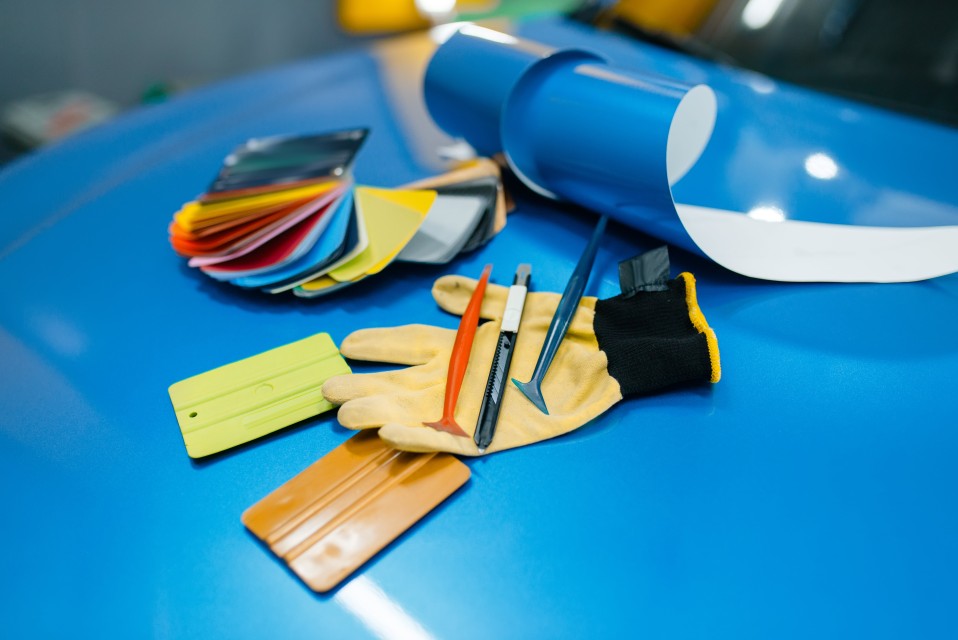
A wrap is a thin vinyl film applied over your car's paint to change how it looks. The choice of finish, the optical property of the film (how shiny, how textured, whether it shifts color in the sun) is where the magic happens. This is the field guide we wish more buyers had before they walked into a shop.
Pick the wrong finish and the car looks wrong. Pick the right one and it looks better than factory.
Gloss
The default finish. What factory paint looks like fresh off the line. High shine, mirror-like reflections, makes colors pop. The eye reads gloss as “new car.”
Pros: wide color range, hides minor swirl, photographs beautifully, easy to maintain. Cons: every speck of dust is visible, fingerprints show on door cups, the most common finish so it stands out less in a crowd of wraps.
Cost: baseline. Every quote in this post is relative to gloss.
If you're not sure what finish you want, gloss is the safest call and the easiest to live with.
Satin
One step down from gloss in shine. Looks slightly velvety in direct light, still reflects colors and clouds clearly. Often called “semi-gloss” in other industries.
Pros: hides surface imperfections better than gloss, doesn't scream “wrapped car” the way some finishes do, photographs cleanly. Cons: harder to keep streak-free after washing (water spots dry differently than on gloss), shows polishing marks if buffed incorrectly.
Cost: same as gloss, sometimes a 5% premium.
Satin is what people pick when they want the look of gloss without looking like they tried too hard.
Matte
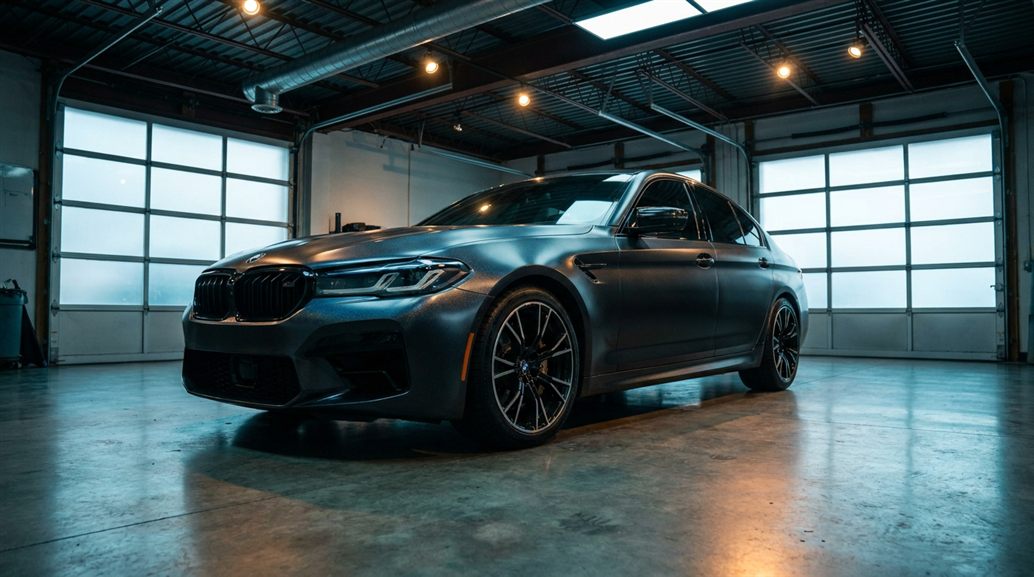
Almost no shine. Reflections are diffused, the color reads flat and stealthy. The finish most associated with murdered-out builds.
Pros: the most distinct silhouette of any finish, hides paint flaws underneath beautifully, looks dramatic at night. Cons: shows every fingerprint, every water spot, and every spilled coffee with no mercy. Maintenance is real. Matte cannot be polished, so a deep scratch is a panel re-wrap, not a buff-out.
Cost: same as gloss to 5% premium on the material.
Matte is great if you wash your car correctly. It is brutal if you don't.
Metallic (any finish)
Fine flakes of aluminum suspended in the film, so the surface sparkles in direct light and shifts subtly with the viewing angle. Available in gloss, satin, and matte base layers.
Pros: dramatically more depth than a flat color, photographs spectacularly, reads as “premium” from any distance. Cons: panel seams can be visible if the flake orientation isn't matched during install (a craft problem, not a material one).
Cost: 5 to 15% above the base finish.
Metallic adds the dimension flat colors are missing. It is also where a great installer's craft starts to show.
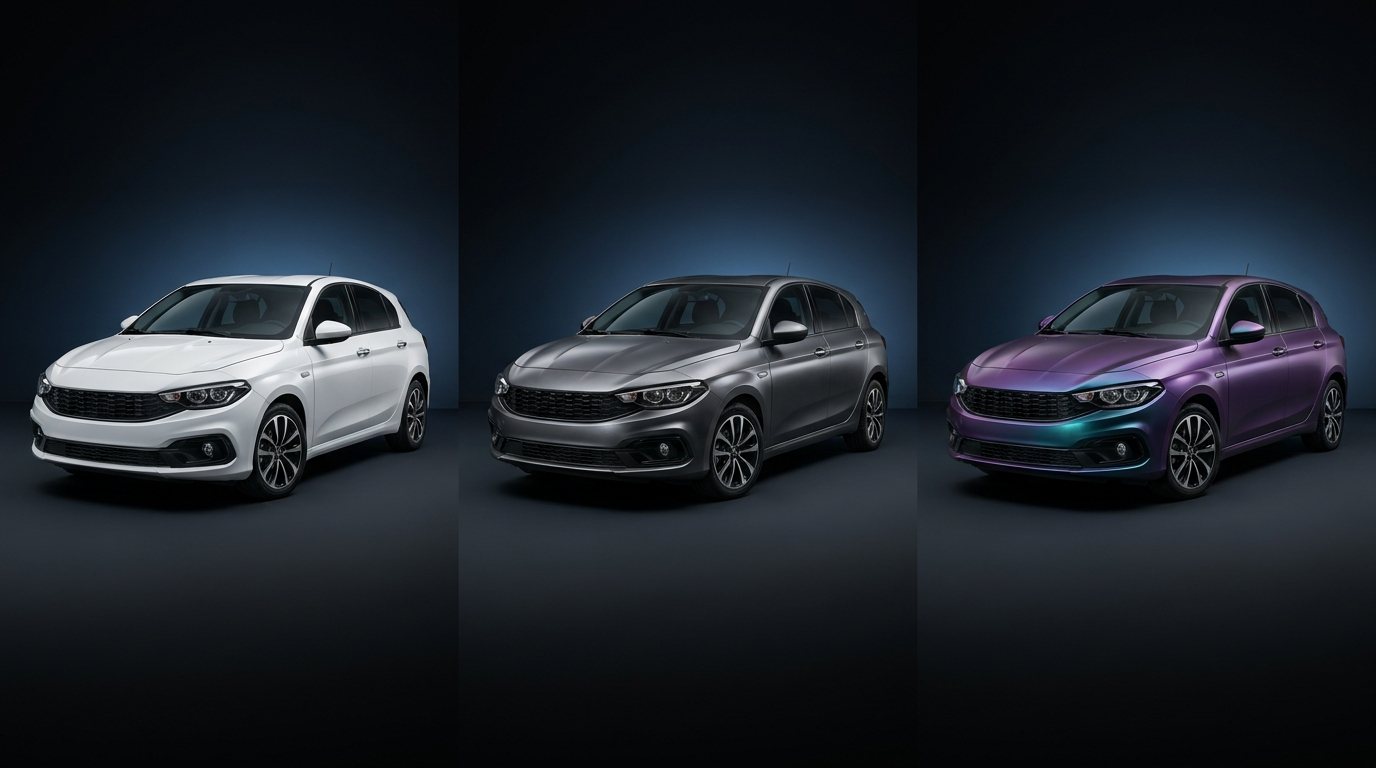
Color-shift (also called “flip,” or by brand names like ColorFlow, Iridescent, ColorFlip)
The film looks like one color from one angle and a different color from another. A car can read purple from the front fender and teal from the rear quarter. Often three or four colors across the spectrum, depending on the product.
Pros: the most dramatic finish you can install, instantly identifiable, a real conversation starter. Cons: the most expensive vinyl on the market by some margin, has the shortest service life of any wrap finish (the iridescent layer is mechanically delicate), and the installer needs to be excellent because seams in color-shift are very visible.
Cost: 25 to 45% above base.
Color-shift makes the car the most interesting thing on the road. Make sure the installer can handle it.
Chrome
A mirror finish, like polished metal. Reflects the world back at you almost completely. The most attention-grabbing finish that exists in vinyl.
Pros: nothing else looks like it. Cons: very expensive, the most fragile of any wrap material, illegal as a road-going color in some jurisdictions (the reflections can blind other drivers), and chrome films are typically warrantied for only 1-2 years vs 7+ for normal vinyl.
Cost: 40 to 80% above base for a full chrome wrap. Partial chrome (mirrors, trim, accents) is much more common.
Chrome is for a show car or a single-panel accent. It is almost never the right call for a full-wrap daily driver.
Brushed metal
Vinyl that mimics the look of brushed aluminum or stainless steel. The surface has fine directional “grain” that catches light along one axis.
Pros: looks unique without screaming, plays beautifully with darker accents, has a tactile feel to it. Cons: the grain direction matters per panel, so a sloppy install can have brushed lines going the wrong way on a fender. Less forgiving than gloss or satin.
Cost: 10 to 25% above base.
Brushed reads as a custom car at first glance even when the build is otherwise modest.
Carbon-textured
A film that simulates the look of woven carbon fiber. Either 3D-textured (you can feel the weave) or 2D-printed (smooth surface with a printed pattern). Two very different products that often get lumped together.
Pros: instant motorsport aesthetic, works beautifully on hood, roof, mirror caps, and trim accents. Cons: rarely looks great on a full vehicle (the pattern reads as costume on large flat panels), and 3D-textured carbon vinyl conforms much worse than smooth vinyl on curves.
Cost: 10 to 20% above base.
Carbon is a great accent material. It is almost never a great full-wrap material.
Printed wrap (also called digital print, livery, custom graphic)
Custom artwork printed onto blank vinyl. Anything from a logo to a full multi-color livery (the racing-style paint scheme on a competition car). The shop typically designs in software, prints on a wide-format inkjet, and laminates the print with a clear protective topcoat before installing.
Pros: nothing else can match the visual specificity, perfect for fleet vehicles, race cars, brand-activation builds. Cons: design hours add to the cost, the printed colors fade faster than the pigment-in-vinyl colors of off-the-shelf rolls, the laminate adds thickness which can show panel transitions.
Cost: add $1,500 to $4,000 depending on complexity, on top of the base wrap cost.
If you want something nobody else has, a printed wrap is the only finish that guarantees it.
PPF-style finishes (clear, satin, matte)
A separate but adjacent category. PPF is paint protection film, a thick clear layer that protects paint from rock chips. It also comes in satin and matte versions, which deliver the visual signature of those finishes plus the protective layer.
Pros: the only finish on this list that meaningfully protects the paint underneath, adds depth without changing the color, removable cleanly. Cons: roughly double the cost of vinyl for the same coverage, much harder to install (and to install well), more limited color/finish selection.
Cost: 80 to 150% above a vinyl wrap of the same coverage. See PPF vs vinyl vs ceramic for the full comparison.
If protection matters as much as looks, PPF-style finishes are the right answer. Otherwise vinyl wins on cost and selection.
The side-by-side decision rules
If you've read this far and still aren't sure, these heuristics work for most buyers:
- If your default visual is “new car,” pick gloss.
- If you want gloss energy with less visual loudness, pick satin.
- If you want stealth and you'll wash carefully, pick matte.
- If your base color choice feels “safe but boring,” add metallic to lift it.
- If you want to be the most-photographed car at every gathering, pick color-shift and budget accordingly.
- If you want a small visual signature without committing the whole car, do an accent panel in chrome, brushed, or carbon.
- If protection matters as much as looks, look at satin or matte PPF instead.
What photos won't show you
The hardest part of picking a finish is that every finish photographs differently than it looks in person.
- Gloss photographs more reflective than it reads in person.
- Matte photographs flatter than it reads in person (your eye adds depth your phone can't).
- Color-shift photographs as one of its colors at a time, which dramatically undersells the shifting effect.
- Metallic photographs more sparkly than it looks at speed.
This is the gap a 3D visualizer closes. A render of your actual car in the finish, rotated under live lighting, gets you closer to the in-person look than any Instagram post ever will. Zeno is the tool the shops we work with use for exactly this; whichever visualizer your shop offers, use it.
The finish you see in person is rarely the finish you saw in the photo. Bring expectations to the consultation, not certainties.
How to walk into a shop ready
- Bring 3 to 4 reference photos. Tell the shop you know these will look different in person.
- Ask to see a physical sample of the finish you're considering, on a panel-sized sample if possible (not a 2-inch swatch).
- Ask for a render of your specific car in the finish, ideally side by side with one alternative you're considering.
- Ask about the finish-specific care instructions before signing.
- Ask whether your installer has done this finish before, and ask to see photos.
Wraps last for years when you pick a finish you'll still love in three. Spend the extra hour at the consultation. Better to walk out unsure than to commit to the wrong finish.