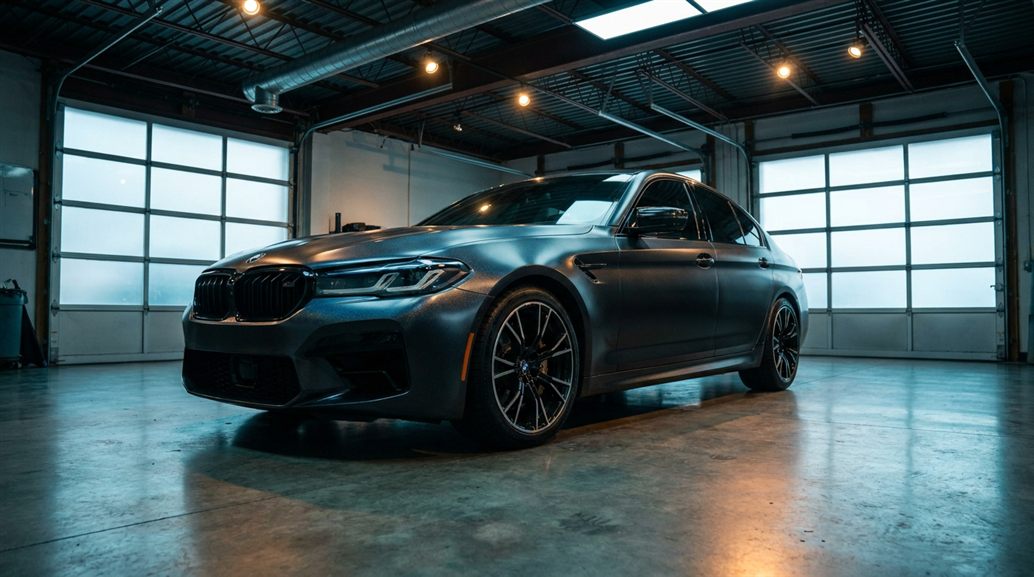
The wheel brand's website shows you the wheel on a Camaro. You drive a 4Runner. The page hopes you can do the rest. Most shoppers can't.
That gap, between “the product on a stock car” and “the product on my car,” is the single quietest reason brand sites have lower conversion than they should. An AI car visualizer closes it. This is why that close matters more than most brands realize.
The stock-vehicle problem
A wheel brand shows you a beautiful render of their wheels on a 2023 Camaro. You drive a 2017 4Runner. You stare at the photo. You try to mentally lift the wheels off the Camaro and place them on your 4Runner. You can't. The proportions don't translate. The colors look different against a different paint. The stance is off.
So you do one of three things:
- You search YouTube for “[wheel name] on 4Runner” and hope someone made a video
- You search Instagram and forum threads with the same hope
- You bounce, because the imagination cost is too high
Most shoppers bounce. The conversion rate on aftermarket products with no specific-vehicle preview is dramatically lower than on products with one.
The stock-vehicle photo doesn't sell the product. It tests the shopper's ability to imagine, and most shoppers fail the test by clicking away.
The configurator problem
Some brands solve part of the problem by adding a basic configurator: pick your vehicle from a dropdown, see a stock 3D model of that vehicle with the product applied.
This is better. But it's still not your car. It's a generic 4Runner. Same trim every time. Same color. Same stance. The shopper still has to do the last mile of imagination:
- “Mine's a TRD Off-Road, will the offset clear my fender flares?”
- “Mine's painted Cement gray, will these wheels look bronze against that, or muddy?”
- “Mine has a 2-inch lift, does the proportional balance still work?”
The configurator can't answer. The configurator was built around a stock model, not the shopper's specific vehicle.
What “show it on my car” actually does
An AI car visualizer takes the shopper's real photo (their car, their color, their lighting, their driveway) and places the product into it. Matched perspective, matched lighting, matched scale. The shopper sees their actual 4Runner wearing those wheels.
The mental work disappears. The decision becomes “do I like this?” instead of “can I picture this?”
Three things happen:
- Conversion goes up. The shopper who would have bounced now makes a decision.
- Trade-up rates climb. Once a shopper can see the difference between three wheel finishes on their car, they consistently pick higher-tier options.
- Return rates fall. The customer who saw their car with the product before buying rarely has “it didn't look like I thought” remorse.
The mental work the shopper has to do is inversely proportional to the brand's conversion rate.
Why brands resist the upgrade
If “show it on my car” is so clearly better, why don't more brands do it? Three honest reasons:
The legacy investment
Most brand sites spent significant money on their current configurator 3-5 years ago. Tearing it out feels like wasted spend. The result: the brand carries a configurator that's a generation behind the market.
The build feels harder than it is
“AI visualization” sounds like a multi-quarter R&D project. It's actually a 30-day embed from a vendor now (see the 30-day embed playbook). The perception gap is the bigger blocker than the technical one.
The catalog work is real
Switching from generic to specific-vehicle requires the brand's product catalog to be cleanly authored: every SKU, every color, every finish, ready to render. Some brands' product data isn't there yet. That's a catalog problem, not a visualizer problem.
The technology is the easy part. The catalog discipline is where most brands stall.
What the conversion lift actually looks like
What changes when a brand actually makes this swap:
- Add-to-cart rate on product detail pages: typically +25 to +60% post-launch
- Average order value: +10 to +25% (driven by trade-up)
- Time-on-page: +30 to +90 seconds (more engagement, lower bounce)
- Return rate on the affected SKUs: down 15-30%
These aren't fantasy numbers. They're what brands report after a quarter of real traffic on a properly-built specific-vehicle visualizer.
The compounding effect: every shopper who completes a confident purchase tells their friends. The visualizer's outputs (renders of their car in the new product) get shared on social. Each share is an unpaid impression.
What “good” looks like for the shopper
From the shopper's side, a great visualizer feels like:
- Upload a photo of your car in 5 seconds (or pick from a few stock shots if you don't have one handy)
- The visualizer identifies the vehicle automatically
- Browse the catalog with thumbnails showing each product on your specific car
- Tap to see it full-size, rotate around, compare side-by-side
- Share or save the result
- Add to cart with the product locked to your vehicle
All of this in under two minutes. None of it requires the shopper to imagine.
The underrated second-order effect
Specific-vehicle visualization also changes which products win.
In the old world, the best-selling wheels were the ones that photographed best on the brand's preferred stock vehicle. In the new world, the best-selling wheels are the ones that look best on the widest range of customer-uploaded vehicles. Different shape of catalog winner.
Brands tracking this carefully are seeing trend lines shift: certain finishes that languished in the catalog because they didn't photograph well on the stock truck are now climbing because they actually look great on customers' cars.
The shopper isn't the only thing that gets more honest. The catalog does too.
Where to start
If you're at a brand thinking about upgrading from a generic configurator to a specific-vehicle AI visualizer:
- Read what is an AI car visualizer for the category overview
- Read the 30-day embed playbook for the rollout plan
- Audit your product catalog for renderable cleanliness (the visualizer is only as good as the catalog feeding it)
- Talk to vendors. xix3D AI is one of the options. There are a handful of others. Demo each on your actual catalog.
The brands that make this swap in 2026 will be the ones competing for share in 2028. The brands that don't will be selling the same products at the same prices, with the same conversion rates, while their competitors pull away.
Shopper expectations have moved. The brands that show up with them win the next category cycle. The ones still asking shoppers to imagine the product lose share without quite knowing why.