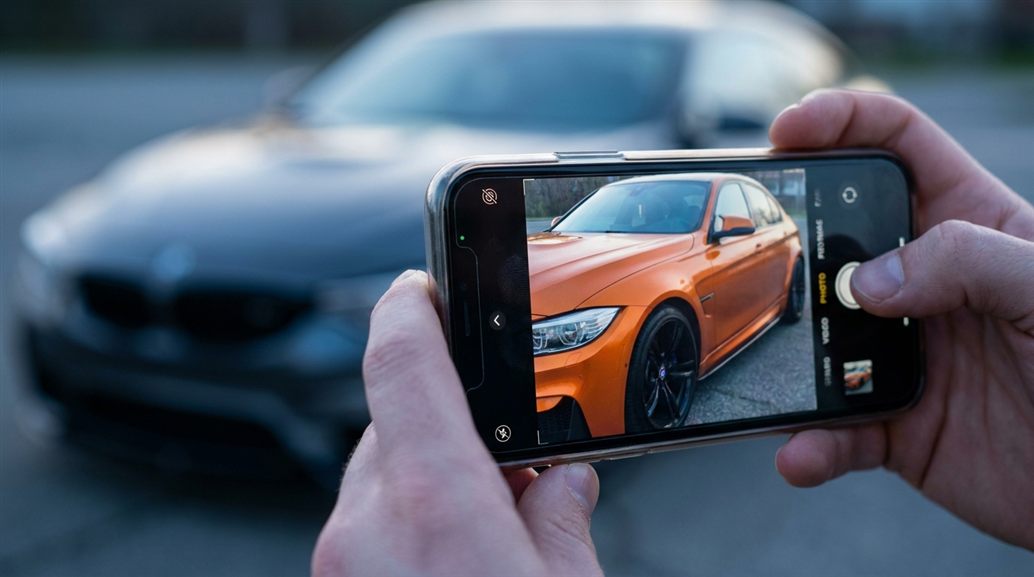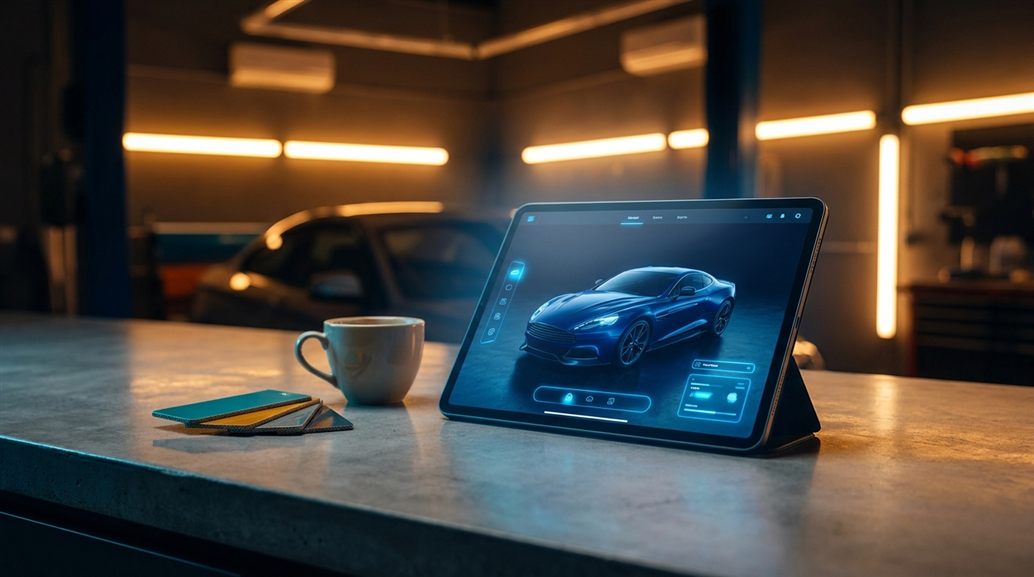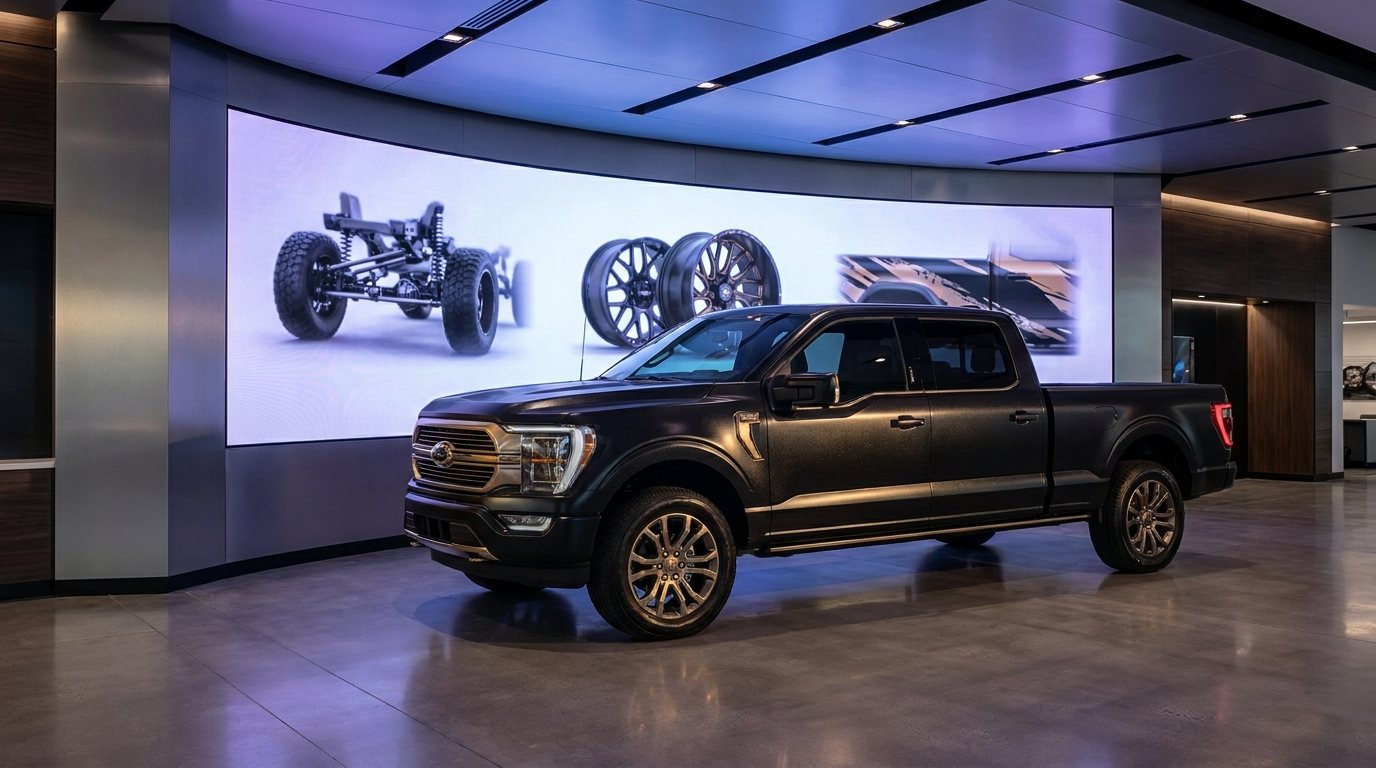
Carmakers don't only sell cars. Behind every Ford F-150 sold, there's a quiet second business of roof racks, tonneau covers, lift kits, sport-bar accessories, custom wheels, factory-approved color wraps. Same for BMW, Toyota, Land Rover, Porsche, every brand on the lot. Internally it's called “parts and accessories,” and at most OEMs it's a multi-billion-dollar revenue line that gets a fraction of the marketing energy of the cars themselves.
Most buyers never realize it exists.
The OEM has no good way to show them.
The accessory display problem
Walk through how an OEM has historically sold a roof rack:
- The accessory shows up in a catalog, either printed (these still exist) or on a configurator on the OEM's website.
- The catalog has a photo of the rack mounted on a press fleet vehicle, usually a different trim, often a different color than yours.
- The buyer tries to imagine the rack on their car. The imagination is bad. The decision is hard.
- Most buyers close the tab. A small minority order anyway. A smaller minority order, decide they don't like it after installation, and return it.
This used to be acceptable because there was no better alternative. The accessory was either invisible or shown on someone else's car. Either was bad, and both were the industry standard.
The visualization category broke that ceiling. With a good AI car visualizer on the OEM's website, the buyer can see the rack on their actual vehicle, in their actual color, before deciding.
The decision moves from imagination to confidence, and accessory revenue starts behaving differently.
What an OEM-grade visualizer actually does
Inside an OEM site, the visualizer typically lives in one of three places, each solving a different moment in the buying journey:
On the build-and-price flow
This is the configurator most buyers know, the one where you pick a trim, a color, a wheel option, and watch the price tick up. AI visualization slots in here as the rendering engine behind the scenes: instead of the configurator stitching together pre-rendered tiles (the old approach), it generates each combination dynamically. The buyer can mix and match in ways the OEM didn't pre-compute, and the result looks photoreal in real time.
On individual accessory product pages
The shopper has bought the car, owns it, and is now back on the OEM site looking at a $1,200 sport bar or a $4,000 color wrap. The visualizer here takes the shopper's actual vehicle (entered by VIN, the unique 17-character vehicle identification number stamped on every car, or by trim and color selection) and shows the accessory on it.
The product page stops being a leap of faith and becomes a decision.
On post-purchase upsell campaigns
Three weeks after delivery, the OEM emails the buyer with “your truck would look great with these wheels.” The email contains a rendered image of their specific truck wearing the wheels.
Click-through rates on these emails are an order of magnitude higher than text-only campaigns, because the buyer is seeing something concrete instead of being asked to imagine.
What changes in the numbers
OEMs that have rolled out AI visualization on accessories report a consistent set of shifts. The exact numbers vary by program, but the direction is reliable:
- Accessory attach rate climbs. “Attach rate” is the share of vehicle buyers who also buy at least one OEM accessory. Historically this number is small (often under 20% in North America). Visualization moves it meaningfully, sometimes into the 30-40% range, because buyers actually engage with the catalog instead of bouncing off it.
- Average order value goes up. A buyer who can see the parts on their car often buys more than one. The visualizer lets them try four combinations in five minutes and pick the build they like, not the cheapest item they can rationalize.
- Return rate drops. The accessory returns that hurt OEMs most are the “it didn't look like I thought” ones. Visualization closes that gap before the purchase, so when the box shows up, it matches expectations.
- Dealer accessory revenue grows in parallel. Counter-intuitively, OEMs that put a great visualizer on the corporate site see dealer accessory revenue go up too. The visualizer educates buyers about what's available; many end up walking into the dealer to buy and install, especially for higher-ticket items.
Where the dealer network fits in
This is the most politically interesting question inside an OEM, so worth covering directly.
For decades, dealers have been the primary surface for accessory sales. A buyer leaves the showroom with a brochure; the dealer's service department later installs whatever they decide they want. That model works for low-information purchases (a cargo mat, a tow hitch). It breaks down for higher-ticket aesthetic purchases (wraps, wheel swaps, body kits) where the buyer wants to see before deciding.
OEM AI visualization doesn't replace the dealer. It does the part dealers have always struggled to do well, the visualization step, and routes the resulting orders back through the dealer for fulfillment and install. All three sides win when this is set up correctly. We've seen this work in practice on programs like the Ford wrap program we built.
The dealer keeps the install. The OEM keeps the brand control. The buyer gets a confident purchase.
The brand-protection angle
A consideration most OEM strategy teams care about more than outsiders realize: brand control.
When a Ford buyer wants their truck wrapped, they currently have two options. Walk into a Ford dealer (limited wrap options, often none) or walk into a third-party wrap shop (full options but zero OEM oversight). The third-party route means a Ford-branded vehicle is rolling around in a finish Ford never approved, on a film Ford never specified, applied by an installer Ford never certified.
An OEM-run wrap program with AI visualization at the front end pulls that experience inside the brand. The buyer sees their truck in OEM-approved finishes, picks one, and the OEM's certified installer network executes the work.
The brand keeps a foot in a category that was happening with or without it.
What it takes to actually ship one
An OEM-grade visualizer is not a SaaS subscription. (SaaS, software-as-a-service, means you pay monthly for a vendor's hosted tool. See configurator cost breakdown for the wider taxonomy.) The scale and integration depth an OEM needs is custom-build territory.
What custom build typically looks like for an OEM:
- Vehicle library: the OEM's full current lineup, every trim and every option, plus a rolling window of prior model years (usually 5-10 years back). Tens of thousands of trim/color/wheel combinations.
- Accessory catalog: hundreds to thousands of SKUs (stock-keeping units, the OEM's internal part numbers), each modeled and rendered to match the OEM's photoreal quality bar.
- Brand-aligned rendering: the visualizer's output has to match the OEM's existing marketing imagery. Different OEMs have different lighting languages, environments, and visual signatures, and the visualizer has to inherit them.
- Backend integration: the visualizer connects to inventory, pricing, dealer locator, financing, and the OEM's CRM (customer relationship management system). Picking an accessory shouldn't drop the buyer back to a generic product page.
- Multi-region, multi-language, accessible: OEMs are global. The visualizer is too.
Realistic budgets for this scope: $180,000 to $250,000+ up front, plus an ongoing maintenance retainer in the $5,000-$25,000 per month range.
Expensive standalone. Against accessory revenue lift in the millions, it's a small line item.
Three patterns we see in successful OEM programs
From building DTC programs for OEMs and major material brands, three patterns consistently show up in the rollouts that move numbers:
1. The visualizer is in the path, not next to it
The visualizer is not a side page the curious might click into. It is the default experience on the accessory pages. The buyer doesn't go looking for it; the buyer can't avoid it.
Default experiences win.
2. The OEM owns the catalog story
Successful programs don't expose the buyer to every possible aftermarket choice. They curate the catalog to a tight set of finishes and parts the OEM is willing to stand behind. The visualizer makes those choices easy; everything outside that set is someone else's product line. This keeps quality high and brand risk low.
3. There's a clear handoff to install
The visualizer creates the order; a certified installer or the dealer completes it. The buyer never wonders “ok, but how do I actually get this on my car.” The path from configured render to physical install is explicit.
Where this is going next
Two shifts are already visible in 2026 and worth watching if you're on an OEM strategy team:
- Direct-to-consumer (DTC) accessory storefronts. Some OEMs are skipping the dealer for low-touch accessories (cargo mats, badges, paint touch-up kits) and shipping directly. The visualizer is the front door of these storefronts.
- Subscription-style customization. The next experiment a few OEMs are running: short-term wraps as a paid customization layer on top of the vehicle. Buy the truck in white; pay a fee to wrap it satin black for two years; switch to matte grey after that. The visualizer is what makes the experimentation feasible because the buyer can see the alternative without committing.
What it means for the rest of the industry
For wrap shops, vinyl manufacturers, and aftermarket brands, OEM AI visualization is good news, not bad. The OEMs are doing what they were never going to do without this technology: educating consumers about what's possible. The buyer who lands on a third-party wrap shop having already played with the visualizer on the OEM site is dramatically easier to close than the one walking in cold.
If you're building any kind of automotive product experience, static product photos and stock renders are no longer competitive with what a buyer can already do for free on a few OEM sites.
The bar for “show, don't tell” just got higher.
If you're an OEM strategy team looking at how to get there, xix3D's AI visualization platform is one of the tools we've shipped for exactly this. Custom-build programs at the OEM scale are also part of what our Partner team does.
The playbook is now mature enough that the question has shifted from “can this work?” to “how soon can we ship it?”